
Reflections on Difference, Belonging, and Inclusive Practice
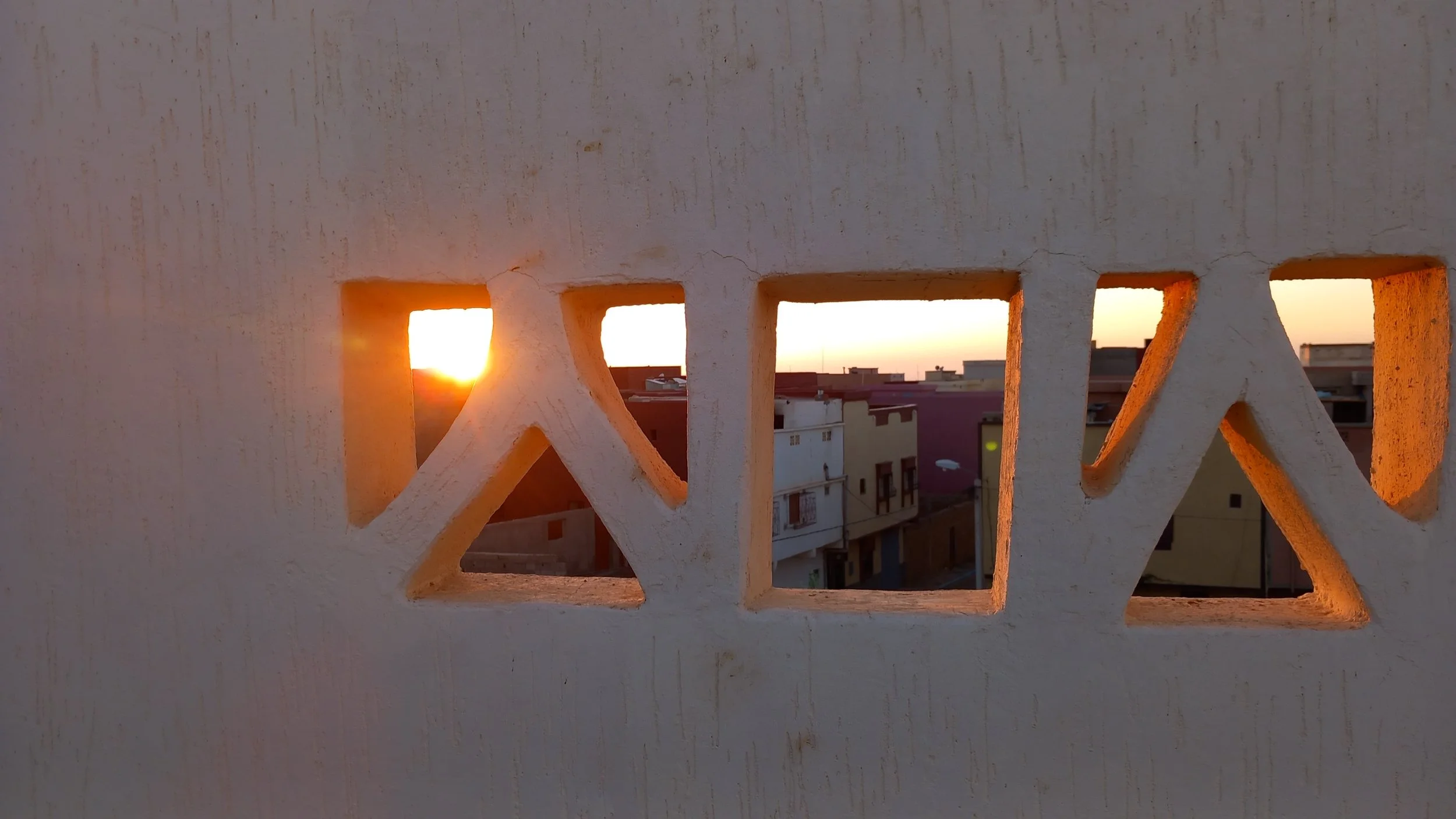
Light through structures
-Reflections on belonging and inclusion
Sometimes, to fully understand the extent of exclusion or marginalisation, it must first be lived.
I was born and raised in France by Moroccan immigrant parents. From an early age, experiences of difference and discrimination shaped my understanding of the world. In the 1990s, such experiences were not subtle: they were often overt and socially accepted. Growing up, we carried a persistent sense of not fully belonging. When visiting Morocco during school holidays, a different form of discrimination emerged. In both contexts, we were reminded that we were somehow “other”.
Living with this sense of uprooting was challenging for many. For me, it also opened a door. I developed an early desire to travel, to live elsewhere, and to explore what it meant to belong, or not belong, in different places. I studied nursing in Belgium and for my postgraduate training, travelled to Bolivia for my thesis, and later returned to France. During those years abroad, I experienced a form of freedom: when discrimination occurred, it felt contextual, even expected. I was, in a sense, legitimately foreign.
That experience changed when I later chose to wear a headscarf in France.
I was aware of the challenges this might bring, particularly in a country where public discourse around religious symbols had become increasingly hostile. Still, awareness does not prepare you for lived reality. I remember vividly the first day I wore it while attending an appointment to have my nursing degree recognised in France. The reception was marked by hostility and disdain: an experience unlike anything I had previously encountered. The day before, I would have been welcomed with warmth, curiosity, and recognition of my academic path. With a headscarf, I was no longer seen as a professional. I was reduced to a symbol.
From that point on, I became conscious of how easily a person can disappear behind others’ assumptions. I was no longer met as an individual, but as an embodiment of prejudice: a walking projection of fear, frustration, and expectation.
When I later moved to the UK, the form of discrimination shifted. In France, it had been blunt and frontal; in the UK, it was subtler, more concealed, but no less impactful. The law offered protection, but social exclusion remained. While working as a phlebotomist in York, I was asked to remove my long sleeves. With support from the Citizens Advice Bureau, I challenged and won that request, but the cost was isolation. Patients would sometimes avoid me by giving up their ticket when my turn came. These moments were rarely acknowledged, and often endured in silence.
Motherhood introduced further layers. Childbirth and interactions with healthcare systems revealed subtle exclusions that were harder to name, easier to dismiss. I questioned myself repeatedly: was this cultural misunderstanding, lack of awareness, or something else? Yet at the core, my needs were no different from any other woman giving birth: safety, dignity, and care.
Over time, and particularly through advocating for my children, I became increasingly aware of how unconscious bias operates; especially within systems meant to support. To this day, it remains a constant negotiation. A headscarf often becomes a surface onto which others project their assumptions. In moments of dark humour, I sometimes say that I embody multiple intersecting points of discrimination: I am a woman, from a minority ethnic background, visibly religious, living with disability within my family, and navigating socioeconomic constraints. Each layer compounds the next.
These lived experiences have profoundly shaped my commitment to neurodiversity, inclusion, and ethical care. They inform how I think about space-holding, accessibility, and whose voices are heard, and whose are not. My work is grounded in the belief that inclusion is not theoretical. It must be practiced, reflected upon, and actively protected.
Today, my aim is not only to support individual wellbeing, but also to stand alongside those who are too often unseen, unheard, or dismissed; and to help create spaces where difference is not merely tolerated, but respected.
Reference note
This reflection draws on lived experience and contemporary understandings of intersectionality and inclusion within health, wellbeing, and social care contexts.
