
Food, Plants, and Memory: A Path Toward Naturopathic Nutrition
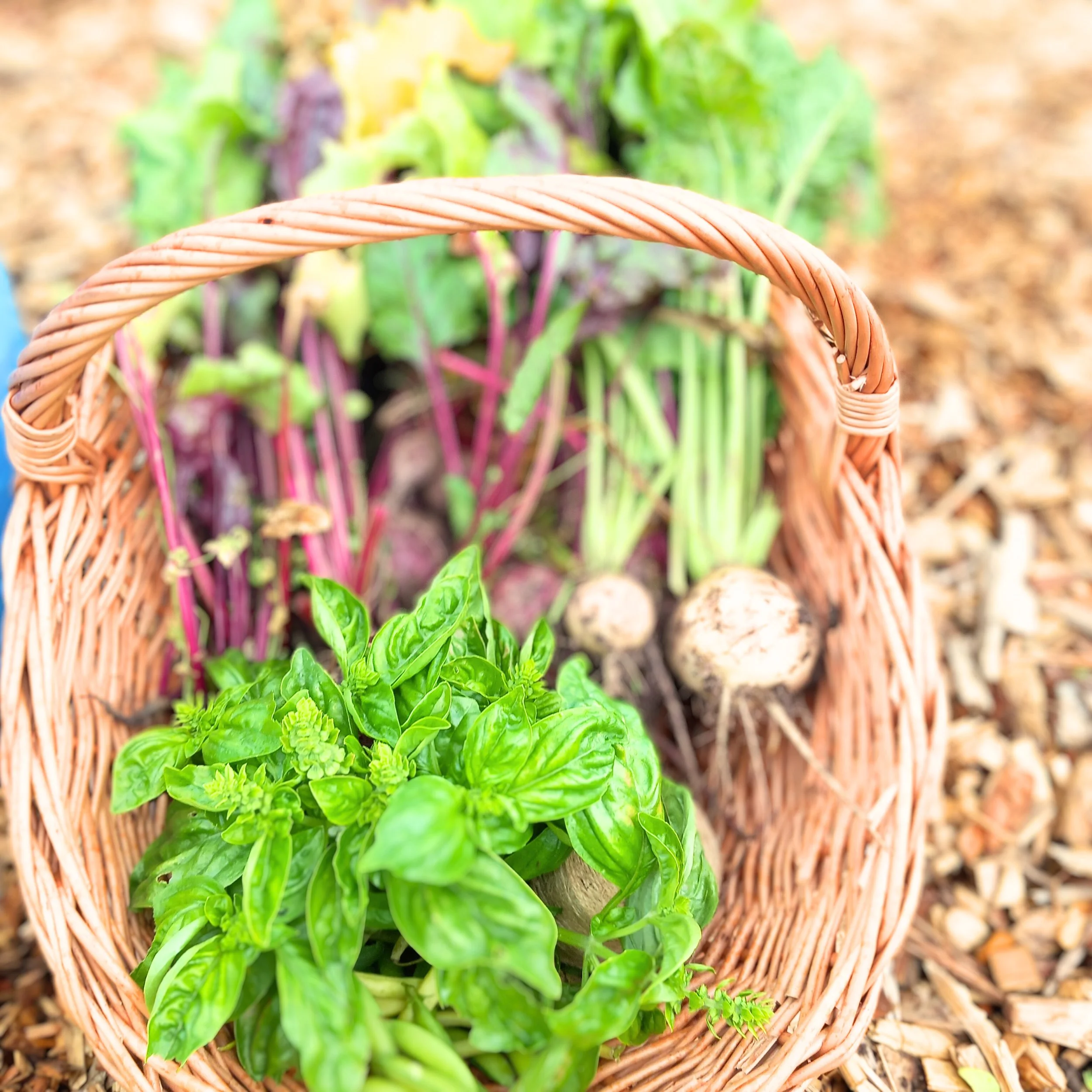
Freshly Harvested herbs and vegetables from the allotment
— food, memory, and nourishment intertwined.
Naturopathic nutrition was always present in my life, long before I had words for it or considered it a field of study. It existed quietly, through everyday practices and cultural traditions.
I come from a culture where plants and food are naturally used to support health. When I had a fever, my mother would place freshly sliced lemon on my forehead. Cumin was given for digestive discomfort, thyme tea for menstrual cramps, and warm milk infused with orange blossom to support sleep. These practices were not framed as “alternative” or “therapeutic”: they were simply part of everyday care.
For a long time, however, this part of my lived knowledge was set aside. Like many, I was carried by a strong belief in scientific and allopathic medicine, and I learned to separate tradition from what I considered “evidence-based” care. It was only later, as I grew older and while raising my children, that a quiet pull back toward my roots began to emerge.
That reconnection deepened through very practical experiences. I have strong memories of my parents growing their own vegetables on an allotment in a Parisian suburb: food grown slowly, seasonally, and with care. Years later, I found myself longing for the same simplicity. I applied for an allotment and, somewhat unexpectedly, was offered one quickly. It came with a challenge: a large plot overtaken by brambles.
Clearing that land and gradually growing our own vegetables became a turning point. It felt grounding, purposeful, and deeply restorative. Working with the soil, observing plants closely, and eating what we had grown ourselves shifted something fundamental in how I understood nourishment. That experience marked a quiet but decisive moment: what I now recognise as a return rather than a discovery.
As my interest grew, I began studying plants and their properties more intentionally. What became increasingly clear was that many cultural and ancestral practices were not myths or superstition. They were rooted in observation, experience, and, as I later discovered, supported by scientific understanding. Spices such as cinnamon, herbs used in Moroccan traditions, and everyday plant remedies had been applied with intention, care, and contextual knowledge passed down through generations.
This realisation opened a broader question for me: how might we move closer to a way of living that supports health using what is already available in nature? Not by rejecting modern medicine, but by reconnecting with food, plants, and practices that support the body gently and preventatively.
My current studies in naturopathic nutrition feel like a continuation of this thread: bringing together cultural memory, lived experience, and contemporary scientific frameworks. Topics such as digestion, the role of carminative plants, and the relationship between food and the nervous system are areas I continue to explore, and which will be developed further in future writing.
In many ways, this path has not been about learning something entirely new, but about remembering, and then learning how to hold that knowledge responsibly, ethically, and with clarity.
Reference note
This post reflects cultural food and plant traditions, lived experience, and ongoing study in naturopathic nutrition. It also draws on contemporary understandings of nutrition, digestion, and plant-based support for health within naturopathic and holistic frameworks.
